Cariri hosts bioinformatics workshop as Fiocruz strengthens science in Brazil's interior
Between the 5th and 8th of May 2026, the city of Crato, in the interior of Ceará, state of Brazil, hosted the Workshop on Projects Using Computational Methodologies and Bioinformatics in the Context of Pharmacology and Infectious Diseases – Cariri 2026. The free, in-person event brought together approximately 30 participants from different regions of the country at the Regional University of Cariri (URCA), and was organised by Fiocruz Ceará in partnership with The Global Health Network Latin America and the Caribbean (TGHN LAC/Fiocruz), Fiocruz's Scientific Computing Programme (PROCC), and URCA itself.
Computational science in the interior of Ceará
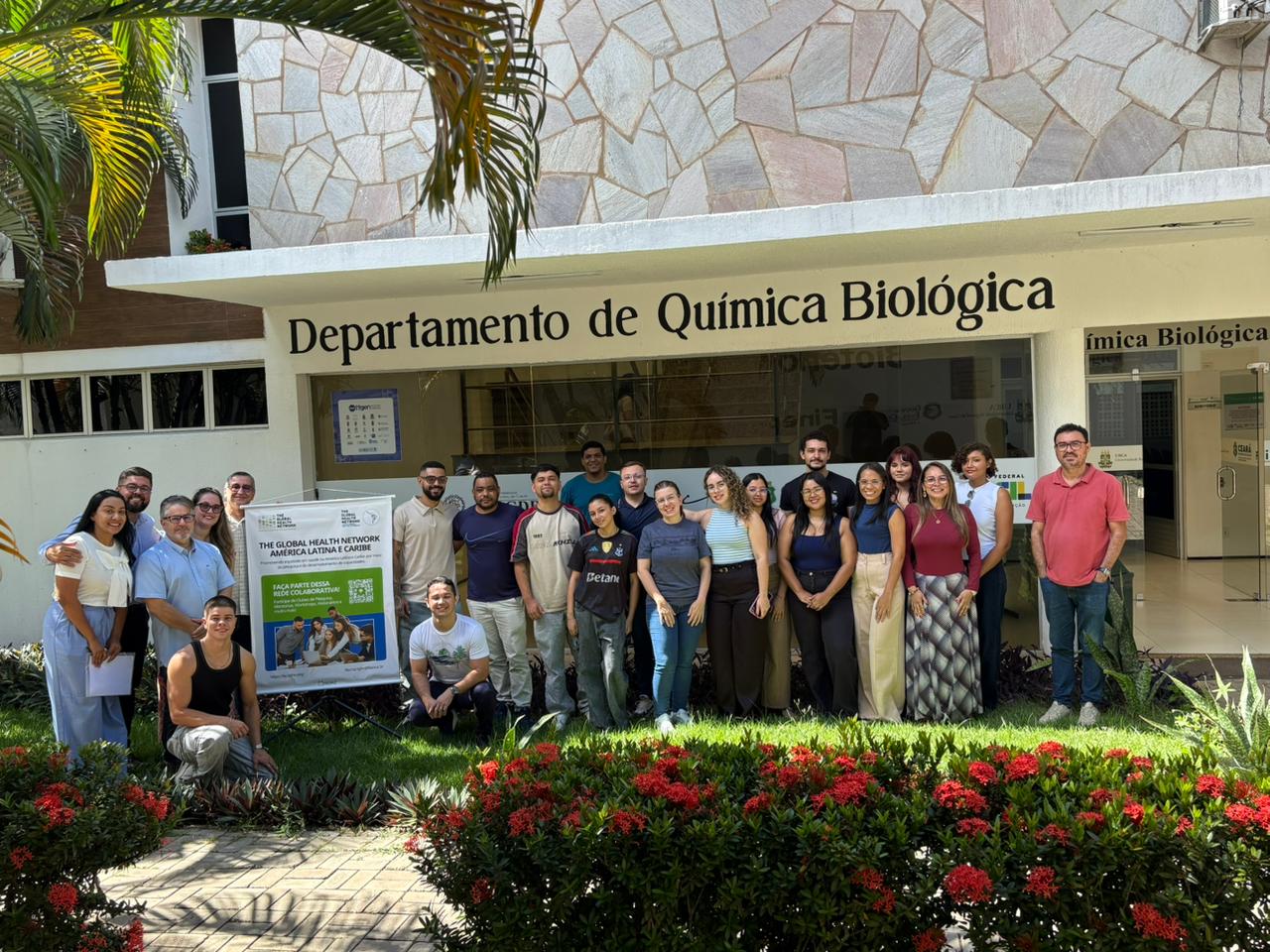
The workshop aimed to bring technical content and science to regions historically far removed from major research centres. "What is perhaps most democratic for the country is the decentralisation, regionalisation, and correction of regional asymmetries in science, technology, and innovation," said Francisco Cunha, coordinator of the Postgraduate Programme in Biological Chemistry at URCA.
Researcher Ana Carolina Guimarães, from the Oswaldo Cruz Institute (IOC), spoke about her first time taking part in the event. "It is a pleasure to participate in this workshop, which encourages learning in the field of bioinformatics and computational biology and contributes to the dissemination of knowledge here, where we see tremendous potential for development."
The presence of students and researchers from various parts of Brazil was highlighted by the lecturers as a testament to the event's reach and relevance. Ernesto Caffarena, coordinator of PROCC and one of the workshop's tutors, underscored the role of TGHN LAC in democratising access to knowledge. "The contact with students from various regions of the country who came to take part in this course shows how important it is to embed this network in this region and across the whole of Brazil," said Caffarena, who served as a tutor at the workshop for the second consecutive year.
For local participants, the event represented a gateway into an area still largely unexplored in the region. Joey Ramone Fonseca, a doctoral student at the State University of Campinas, shared that the combination of artificial intelligence and molecular modelling — the focus of his research — "is an area that is still underexplored in the region, but this course only adds to my motivation and encourages me further."
Beyond the workshop: an ecosystem taking shape
The workshop formed part of a broader effort to strengthen the regional scientific ecosystem. The first edition, held in May 2025, had already yielded tangible results: the formation of a bioinformatics study group in Cariri that identified natural molecules with potential activity against proteins linked to antibiotic resistance.
With a 30-hour programme centred on practical activities, the initiative demonstrates that it is possible to foster critical thinking and scientific development in locations far from major urban centres.
Jaime Ribeiro, researcher at Fiocruz Ceará and regional collaborator for TGHN, highlighted that the event is part of a series of strategies aimed at training students in the field of drug development applied to infectious diseases. "In addition to the workshop, in the Cariri region we have been developing a range of projects, including research clubs on infectious diseases and, more recently, a bioinformatics research club," concluded Jaime.
Would you like to be part of an infectious disease research network in Cariri? The Infectious Disease Research Club in Cariri connects students and researchers from the region through mentoring, workshops, and collaborative projects. Visit the link to find out how to get involved.